New York Psychoanalytical Society and Institute
The Philoctetes Center regrets to announce that due to insurmountable budget shortfalls, we are closing our space and discontinuing our programs. We would like to thank all of our devoted followers, who have helped to make each Philoctetes event lively, informative, and memorable. We would also like to thank the great number of you who made contributions over the past two and a half years that helped to sustain us after a crippling loss of funding in December of 2008. Your belief in and enthusiasm for our unique mission made our continued existence possible. In addition, we are indebted to the many scientists, scholars, and artists who participated in our events over the years, and whose intellectual and creative contributions were so vital to our programs. The decision to close the Center has been a difficult one. In the last year, our events have been more popular than ever, attracting audiences of growing size and diversity. We deeply regret that we will not be able to continue our mission of stimulating this community of passionate, curious minds.
The Philoctetes website will remain as an archive for our body of work. You may also watch videos of all of our events on our
YouTube channel. We hope that these resources will continue to offer insights into multidisciplinary thinking and stimulate discussion about the nature of creativity.
Philoctetes Video Archive...
Participants: Nils Norén, Gary Null, Benjamin Sachs (moderator), Andrew Smith, Ronald Stram
Please click here to learn more about this event and watch the video in its entirety.
Videos of all Philoctetes programs are archived on our Past Programs page.
Philoctetes Video Archive...
Participants: Edith Ackermann, Paul Bloom, Ruth Fischer, Marcel Kinsbourne, Dorothy Singer, Marjorie Taylor (moderator)
Please click here to learn more about this event and watch the video in its entirety.
Videos of all Philoctetes programs are archived on our Past Programs page.
Philoctetes Video Archive...
Participants: Michael Braziller (moderator), Timothy Donnelly, Anne-Marie Levine, David Pollens, Alice Quinn, David Shapiro
Please click here to learn more about this event and watch the video in its entirety.
Videos of all Philoctetes programs are archived on our Past Programs page.
Philoctetes Video Archive...
Participants: Robert Frank, Rabbi Philip Hiat, David Kirkpatrick (moderator), Jay Phelan, Lawrence Tancredi
Please click here to learn more about this event and watch the video in its entirety.
Videos of all Philoctetes programs are archived on our Past Programs page.
Philoctetes Video Archive...
Participants: Alberto Bisin, William Brown, Paul Glimcher, Edward Nersessian (moderator), Elizabeth Phelps
Please click here to learn more about this event and watch the video in its entirety.
Videos of all Philoctetes programs are archived on our Past Programs page.
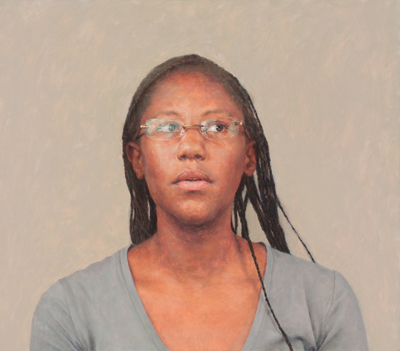
Portraiture: Old Masters and New
Art Exhibition
February 26 - May 14, 2011
Works by: Jenny Dubnau, Phyllis Herfield, Matthew Miller, Philip Pearlstein, David Pettibone
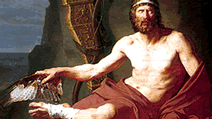
The Story of Philoctetes
On the way to Troy, Philoctetes is bitten by a serpent. The pain is so extreme and the wound so foul smelling that Philoctetes is exiled to the island of Lemnos... More
PHILOCTETES CENTER (TM), the Bow-and-Arrow Design (TM), THE MULTIDISCIPLINARY STUDY OF IMAGINATION (TM) and DIALOG (TM) are trademarks of The Philoctetes Center for the Multidisciplinary Study of Imagination. The contents of this website Copyright (c) 2007 by The Philoctetes Center for the Multidisciplinary Study of Imagination.
All Rights Reserved. Any reproduction, distribution, public performance, public display or other exploitation of the contents of this website, or any portion thereof, without the prior written consent of The Philoctetes Center for the Multidisciplinary Study of Imagination, is expressly prohibited.